


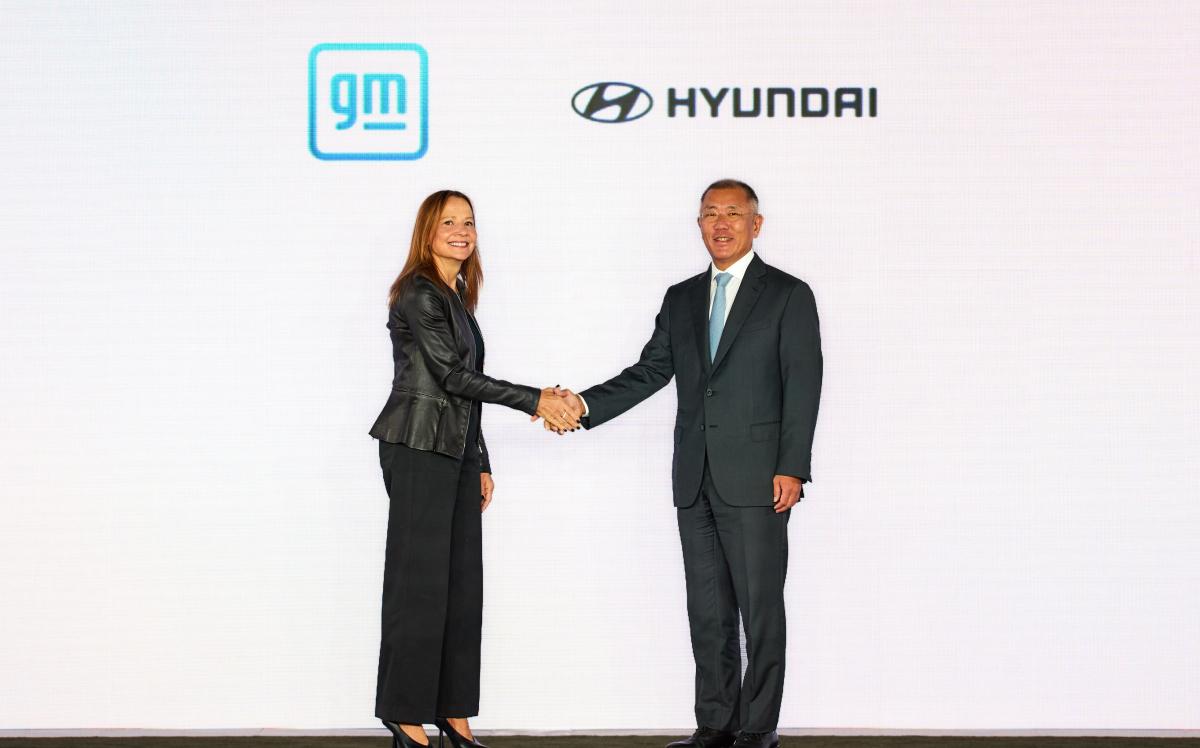
It’s not at all uncommon for major automakers to collaborate on projects, share knowledge and find ideas that benefit all parties — a recent example is GM and Hyundai, who hope to work together to improve their competitiveness while reducing the costs and risks associated with developing new technologies.
The two companies have signed a non-binding agreement to evaluate joint venture opportunities and begin working immediately toward a binding agreement, according to GM CEO Mary Barra, to “unleash the scale and creativity of our two companies to deliver more competitive vehicles to customers more quickly and efficiently.”
Projects the two companies are considering working on together include joint development and production of passenger and commercial vehicles, internal combustion engines and clean energy technologies for electricity and hydrogen. They will also explore supply chain efficiencies. Joint sourcing of battery raw materials and steel could bring significant savings to both companies. GM and Hyundai will explore ways to leverage their scale and know-how to do all this while reducing costs.
It may take a while to see results from these efforts, but with the EV market in somewhat shaky waters, automakers are wise to work together to cut costs: Ford’s EV division, for example, expects to lose about $5 billion this year.
Of course, there are other kinds of alliances between automakers: In June, Volkswagen and Rivian teamed up, with Volkswagen planning to invest $3 billion in the EV company and another $2 billion in a joint venture between the two.
