


Above all else, you’ve got to write what you know.
“Talking about comics and mysteries in comics and comic book history — these are all things I’m passionate about,” says writer Alex Segura, who has written everything from Dick Tracy to Encanto: Nightmares and Sueños and a few dozen other books and comics in between.
So, when Segura found himself between bigger projects, having wrapped up his Pete Fernandez novel series and a Poe Dameron novel, he opted to chase those aforementioned creative dreams.
“And for me, it was really like, ‘Let me write the book that I want to read.’ Like, what book would I get a kick out of existing that only I can write,” said Segura. “And then my mind went back to this thought I had while reading Kavalier & Clay. I was reading that book and loving it and I was like, ‘Wow, this book speaks to me as a reader. I just wish I could read The Escapist book pages.’ Like, ‘I wish I had those pages in there so I could see what it was.’ That’s the deep dark secret of a lot of writers: you’d probably write this for free. I don’t want to advertise that, but it’s also like I needed to get that story out.”
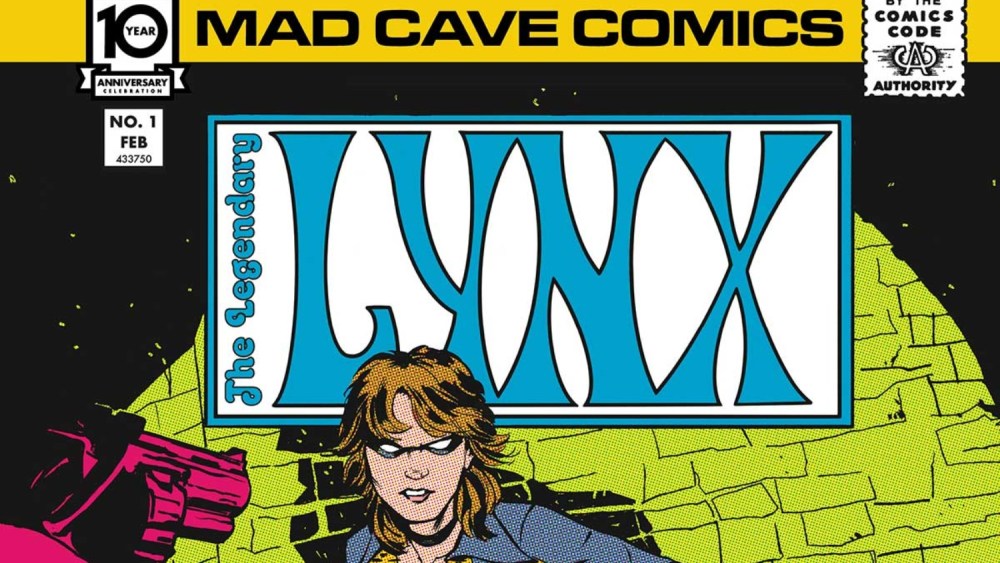
The end result is a kind of loose “trilogy” comprised of 2022’s Secret Identity, a forthcoming comics collection/OGN called The Legendary Lynx, and a brand-new novel and sequel to Secret Identity, Alter Ego. Not that any of this was ever the plan, mind you.
“It was never strategically planned, like, ‘Oh, it’s going to be two novels with one graphic novel in between them. And it’ll be this multimedia empire.’ It was very organic — literally Sandy (Jarrell, artist) and I were working on the Secret Identity pages and having such a blast that we thought, ‘Well, wouldn’t it be cool to expand the story and really treat it like an in-world thing and very meta,” said Segura. “Like, this is a lost graphic novel. And then at the same time, I’m talking to Zach (Wagman), my editor, and he’s like, ‘There’s another novel in here that you should think about making.’”
There’s a lot happening already, but let’s begin with Secret Identity. As Segura already mentioned, that novel features comics pages from The Legendary Lynx, a ’70s standout title from the fictional Triumph Comics. Only the real story’s totally behind the action, as the novel follows young writer/editorial assistant Carmen Valdez as she tries to make her name while grappling with “the tangled web of secrets and resentments among the passionate eccentrics who write comics for a living.”
You can very much read Secret Identity as this really well-developed murder-mystery. But since you’re likely a comics fan, that book does something really powerful and effective regarding the medium.
“There’s a lot of power in the contrast of, ‘Wow, this colorful superhero page is being created by this person in this dingy New York apartment in the ’70s. And where the city’s bankrupt and crime is sky high,’” said Segura. “That’s really what made Secret Identity sing — that really stark contrast of the wonder of comics and then this very dark reality.”
Courtesy of Flatiron Books.
Similarly, the book engages the comics medium not only by providing really dope art, but using these pages and their context and relationship with the rest of the book to do something even more powerful and effective.
“The cool thing about Secret Identity is that you’re reading these pages that the character you’re invested in created,” said Segura. “And so you’re getting into her head and seeing what she was thinking about and seeing, like, why she’s having the Lynx cornered here because she is literally cornered in the story. And when you’re reading the Lynx, you’re reading a fun comic that feels like a ’70s comic. But if you’ve read the novels, there’s more to this and you’re adding subtext and meaning, but not doing it in a way where it feels like it’s just bells and whistles. It’s really something substantive.”
Given all that cross-medium back-and-forth, then, it’s no wonder that Secret Identity was a hit, earning Segura the 2023 Los Angeles Times Book Prize for Mystery/Thriller. But his greatest accomplishment goes beyond such lofty prizes.
“I think it was a validation in a lot of ways,” said Segura of the book’s response. “For people like us, readers that have spent our lives reading comics, it was like candy. It was like, ‘Oh, look, he’s mentioning Jack Kirby here. Cool, there’s a Gerry Conway reference.’ It was just like Easter eggs galore. But I heard from so many readers that were not comics people that said, ‘Wow, this really was such a unique setting, and such a different world that it made me want to read comics.’”
Segura added, “And people took those excerpts that Sandy and I did as almost a primer for graphic novels. And a lot of them said that after reading Secret Identity that made them more in tune with comics, which is gravy. Like, obviously you want people to buy the book and enjoy the book, but it’s a great secondary benefit that now a lot of readers are into comics because of it.”
That success is part of why Alter Ego matters so much. Here, we meet Annie Bustamante, a beloved filmmaker, author, and comics artist, who gets a chance to adapt her favorite comic book character, The Legendary Lynx. Only given the history of the character (a lot of which is outlined in Secret Identity), Bustamante is forced to grapple with her fandom and the “dark truth about the character she loves.”
It’s also the book where Segura had to figure out a balance between telling a story with reach and really dissecting the comics-making industry.
“The only thing I did try to pump the brakes on was there are moments where you just could fall into getting far too into the weeds, where you’re talking about just the minutiae of all this stuff,” said Segura. “Like, ‘Oh, they had to ferry the stuff to the letterer who lives in New York’ as in Secret Identity. Or the kind of inks they use to color. Like, that’s neat and it’s a little one-off, but there’s also moments where you could very easily go into a long explanation of the value of like Jim Starlin’s Adam Warlock run. You could take all these detours and it would just become a 600-page book.
Segura added, “I wanted to show the downside sometimes of the churn of working in comics. But I also think Alter Ego definitely shows the highlights of the joy of seeing art come in and the joy of having it published and the excitement of working on these characters that you grew up reading. I wanted it to be about what the struggle is now of art versus commerce, but you also want it to be just a fun mystery. That’s the challenge.”
Segura went on to call Alter Ego the “dark side of the coin” when it comes to comics and its surrounding industry.
“Like, what happens when IP becomes a commodity and every bit, every character that’s ever been thought of is now a potential motion picture or TV show or audio drama or whatever,” said Segura. “Like, the exploitation of IP is such a big thing that wasn’t around in the ’70s. A lot of these creators working in the ’70s, it was a gig; they weren’t thinking about creator owned (projects) or exploiting IP.”
It became a matter of finding just what to say and what might be better left on the cutting room floor.
“The best mysteries are the ones that feel really lived in,” said Segura. “I keep going back to Megan Abbott, but it’s those worlds where they spent time researching them or living in them. And for me, with Secret Identity, I thought, ‘OK, I know comics, this will be easy,’ but it wasn’t easy. I had to do a lot of research and I had to talk to a lot of people that worked in comics. Where did creatives live if they worked at comic book companies? Where could they afford to live? Or what restaurants did they go to? How did the office work? Did they have photocopiers? Some of it I’m sure wasn’t all right, but enough to give the reader a sense of this is real, lived in sense.”
Alter Ego also meant that Segura had to ask himself a very important question to really tell Bustamante’s story.
“And so the challenge with Alter Ego is like, what is that contrast? I think it’s Annie’s joy and excitement and about this potential project,” said Segura. “Then the reality is that it’s being driven by these corporate needs that she doesn’t even want to understand. Like, there’s a moment at the end where — I’m not spoiling too much — where the project is taken away from her and they choose this really controversial way of completing the project. And it felt very scary to me as a creator but it also felt like I could see that happening.”
Courtesy of Flatiron Books.
In response, Segura had to tap into his convos with other comics creators and explore some of these shared experiences.
“I think nowadays those conversations happen much more frequently than they would have in the ’70s, especially because you (didn’t) have social media, text messaging, and email — these connective things that bring you into contact,” said Segura. “And I think it’s good to have those conversations to compare notes and say, ‘This is what happened to me. Did that happen to you? Or how was this?’ I tried to reflect that as honestly as possible without detracting from the central mystery of the story.”
It also meant that, despite this being Bustamante’s story, Carmen Valdez inevitably shows up in Alter Ego. But it couldn’t just be any old appearance/cameo.
“But I knew Carmen had to play a part,” said Segura. “It doesn’t really spoil anything because I’ve said it before, but she shows up in a very meaningful way. She’s not the co-star of the book. She’s ever-present. Obviously, the Lynx and Carmen are part of the story from page one, but it’s very much Annie’s story and her struggle and her background.”
As such, Alter Ego had to feel like it stood on its own two feet.
“And so that’s why it doesn’t feel like a sequel in the sense of, ‘Here’s Carmen’s next adventure. How is she going to get out of this one?’ It’s not a series,” said Segura. “This is just the other part of the whole story, but you can read it in two chunks. And it all hinges on the character. If Annie wasn’t interesting, if she felt like just another Carmen that happens to live in the modern day as opposed to the ’70s, it wouldn’t have worked. I just didn’t want it to feel trite. That was the big challenge. And that’s what I really struggled with.”
Added Segura, “I knew that it couldn’t be like Carmen through the years. Like, Carmen reads Watchmen or Carmen experiences the Image (Comics) revolution or Carmen watches companies fall apart or whatever. I wanted it to definitely be like Secret Identity, but these are the two sides. So that meant the protagonist had to really speak to me and feel very different.”
Perhaps all that’s why Segura enjoyed some of the “tension” around their meeting and larger connections.
“I think my favorite parts of writing Alter Ego were the moments they were together, because I could see that there was a lot of connective respect there and admiration, but also that they’re feeding off each other on the page,” said Segura. “Like, it’s that moment where you’re like, ‘Oh, these two characters that have danced around each other for 300 pages are finally together.’ And it felt like a really nice payoff. My editor said, ‘We need that Luke moment, where you see him at the end of The Force Awakens and you’re like, ‘Oh shit, he’s here.’ That’s what we were going for. Obviously just tonally, not literally, but I wanted Carmen’s arrival to feel important and not this generational buddy cop story.”
And it’s the Annie-specific ideas and issues that really prepares us for the third “player” in this cross-medium literary bonanza.
“It’s not a spoiler to say Annie was a fan of the Lynx and felt a great identification with the character and then even more of an identification when she discovered, ‘Oh, there’s this Cuban-American woman who wrote an issue.’ At that point, she only thought that Carmen wrote that one issue; in Secret Identity, she’s only credited in one issue,” said Segura. “And so she felt a great identification and connection there and was already a fan. So that paved the way to her being a professional. So I think Annie’s fandom is really a big part of what propels her in the story. Like, her passion for this character. The book starts out and she’s drawing a Lynx comic for fun; she just loves the character and she’s like, ‘Nobody is going to ever publish this character. I’m just doing this for fun.’ She’s not even in comics anymore. She just happens to be an artist that used to work in comics. I wanted that passion to be clear from early on; that’s really the only reason she takes the gig.”
Courtesy of Mad Cave Studios.
That core notion, then, opens up a central part of both Alter Ego as well as The Legendary Lynx: if you want to make something, just do it.
“I would say that like Roy Thomas and Gerry Conway’s era, probably most clearly with Paul Levitz, was the era and that first wave (where) fans that became pros, but you were still in that era of comics where there was no opportunity for creator-owned stuff. You really just went into the machine,” said Segura. “And now we’re in a world where you can make your comic, you don’t have to just work at Marvel or DC. You can create your own webcomic and put it out there. You can do a Kickstarter and you can have a Patreon. There’s so many ways to either get your story out there or get noticed.”
But as much as we live in a golden age for making comics, Bustamante’s journey ultimately touches on a similarly vital idea.
“What is that thing that you just see and you’re like, ‘Oh my God,’ and it not only reignites your interest in that project, but it reignites your passion for the medium. And that’s kind of what happens in the book,” said Segura. “Annie has drifted from comics. She’s built this very successful film career and was nominated for an Oscar. But she’s between movie projects and she’s doing this comic thing on the side as a reprieve from her day-to-day. She’s working a different muscle for fun. And then somehow that becomes the next thing. She couldn’t have predicted it, but then the passion for doing that work pulls her back in. I think it’s relatable. If you have a lot of interest, like sports or music or whatever hobby, sometimes you drift away from it and then something pulls you back in and then it’s like you’re re-energized because you’ve been doing other stuff that that muscle hasn’t really been used.”
Not that Segura needed much help staying in comics (he’s been steadily busy with work for years), but you can’t deny the decidedly meta aspect. The Legendary Lynx didn’t need to happen but it almost demanded its existence.
“Not to get too under the hood, but you have these little sequences. Like, one of them was a final splash page or one was an opening three-page sequence. One is a sequence by another creative team,” said Segura. “And I was like, ‘How do I weave this into one narrative?’ And I really just had to lay out the pages and have empty spaces for the other pages and figure out what’s happening between these pages. And the end result was a really bonkers comic that felt very much like a ’70s Marvel comic, like Moon Knight or some of the stuff (Jim) Starlin was doing. Like, some of the weird Legion stuff going on at DC. Just trippy and on the edge of being really dark or adult, but definitely something that I think fits in with what was coming out at the time. And that was a trip, making it being limited in the way that those comics were limited. You have more subtext and you’re dancing between the raindrops a lot more, but I’ve never written a book like that. I probably never will again.”
Unlike with writing two novels, Segura had help on Legendary Lynx from the aforementioned Jarell, who seemed just as dedicated in taking this project from a hybrid work and making a proper comic book story that stood on its own accomplishments and robust narrative.
“Sandy was happy, and Sandy is always the harshest critic,” said Segura. “He’s just so hard on himself and everything else but in a good way; he’s just a perfectionist. So when he was happy with it, I was like, ‘OK, we did it.’ It was probably a lot more work than (Sandy) envisioned when he signed up for it. I think when he maybe initially was like, ‘OK, 12 pages, I can crank that out and it’ll be fine.’ But he’s so invested that he read the whole novel.”
Segura added, “And then with Alter Ego, he read the whole outline and was drawing already as I was writing the book. So we were running in parallel, but he’s so invested and immersed in this world that when he designed the Lynx, I didn’t have any comments. He read the descriptions of the character in the book as they existed apart from the art. And then we just synced everything up. And with Alter Ego, I think he went back and read the novel after he did the art and tweaked some stuff and it was really fascinating to see. So I feel bad because it did involve a lot more work for him than I think it would be with just reading a script.”
Because, as its writer explained, The Legendary Lynx is a vital part of this story and not something just thrown together. Sure, you can read any one part individually and get a great story, but why not go deeper still?
“I think sometimes people will think, ‘Oh, well, I don’t have to read the comic pages.’ I haven’t gotten that response from many people, but they’re an integral part of the story,” said Segura. “Because when you read the prose and then you hop into certain sequences, it’s like a good mixtape. They’re put in certain places for certain reasons. And what’s going on in Carmen’s subconscious as she writes these stories is reflected in the external narrative of the prose. The way I look at it is (having) these three pieces that if read together — Secret Identity, Legendary Lynx, and Alter Ego — you will get more out of it. You’ll find little jokes. You’ll see little things. Like, if you read the captions on the excerpts, you learn things before they’re revealed in the plot, which is all done on purpose.”
Courtesy of Mad Cave Studios.
If nothing else, Segura said that not only is The Legendary Lynx where you can see all the Secret Identity/Alter Ego comics pages “completely lettered and in color and expanded,” but there’s “several sequences where Sandy just went to the next level.”
Segura added, “I started doing that novel and it’s like, ‘Well, what if the art sequences are drawn by somebody else?’ And then Sandy has to change his art style to reflect Annie’s art as opposed to Doug Dettmer’s artwork. So it was very organic, which I think is what makes it work that they all. It’s a natural outgrowth from that initial story.”
Part of the larger decision-making behind the complexity of this story is that Segura has a specific relationship in mind with potential readers, and he wants to give them more bang for their respective buck.
“One thing I always try to do is never underestimate the reader,” said Segura. “Like, never assume that they want the simplest, dumbed-down explanation. You want readers to feel challenged and you want to overestimate their ability and give them stuff that is complicated and confusing and that pays off in a meaningful way. You don’t want it to feel like you’re just watching reality TV while scrolling on your phone, which is totally fine if that’s what you want to do. But if you’re buying a novel — and novels are not cheap and comics are not cheap — you want an immersive story that’s not going to talk down to you. That’s going to feel like you really need to work at it to engage with it.”
But it’s also because, as Segura mentioned, Legendary Lynx is especially meta. Sorta.
“I think the meta of the Lynx comic is more in the world,” said Segura. “Like, we have an intro from J.M. DeMatteis, and he does it completely tongue-in-cheek. He’s like, ‘I read this book before I started writing and it’s amazing.’ I grew up on DeMatteis’ comic book work, like Spectacular Spider-Man and obviously Kraven’s Last Hunt and everything else. And then we have some additional content in the back matter, where it’s Brian Cronin, who did Comics Should Be Good, talking about the Lynx. That’s where the meta stuff ends cause you read the comic and it’s a comic.”
But that meta-ness actually goes deeper still. For one, there’s something about returning to a lost character (albeit that you made up), and how the very notion helps stir some creative juices.
“I was listening to a podcast yesterday where Jerry Duggan was talking about…Daredevil was a non-entity when Frank Miller came and he wanted this little corner to take risks,” said Segura. “Same with Walt Simonson on Thor. When a creator picks up a character that hasn’t been used well, or hasn’t really existed in a long time, that creates a really special silo.”
Segura added, “Having somebody dust off this character that they loved and make them shine is something that I think is really relatable when you’re being creative. I can relate to it. Something like Dick Tracy is a good example. The character’s been around a long time, but I thought that Mike and I had a very unique take, and I’m glad that we have had the opportunity to use it. But it wasn’t something where I was like, ‘Hmm, let’s connect these dots.’”
And, of course, the idea of being as meta as The Legendary Lynx is just means it’s part of larger ongoing conversation in comics.
“I’ve talked to a few people, a few creators about different things that feel like they’re in the same general subconscious,” said Segura. “I love Public Domain; I think it’s a great comic. I think Chip (Zdarsky) is touching on some similar themes to Secret Identity and Alter Ego. Local Man by Tim (Seeley) and Tony (Fleecs) is really great and it plays in between. I’m not saying we’re all doing the same thing, but it’s in the same wheelhouse.”
Segura added, “I love both of those books. I would say those are great examples of how to do it right in that the stories still have to be good, you know? At the end of the day, like if it feels like just an exercise in being cute, like, ‘Oh, we had these comic pages and now we smush them together and now it’s a big comic.’ Like, if the comic itself is not entertaining, then the little trick of light only lasts for so long. So that’s why the Lynx has to feel like a comic; it should read and be entertaining and feel of the time and feel like Sandy and I and everyone on the team put in the care to make it good.”
Courtesy of Mad Cave Studios.
But there’s one more slightly meta aspect worth mentioning: sometimes if you open up to the universe, great and weird things can happen.
“I think what we loved about it is that it turned out to be so much weirder than we anticipated it would be,” said Segura. “Like, I think we went in thinking, ‘OK, it’s going to be like Daredevil, Moon Knight and Batman — that kind of vibe. We didn’t anticipate the supernatural elements. We didn’t anticipate revealing Claudia’s origin or the Lynx’s origin. A lot of that came through the work of expanding the story.”
Once The Legendary Lynx and Alter Ego both land, Segura said the story’s pretty much done. The next goal, then, may be to add new layers to this multimedia lasagna.
“I think the natural hope is that it would become something else, be it a show or a movie,” said Segua. “Like, you take all these story elements and make it into another medium. But in terms of just pure storytelling that I generate…I feel like it’s OK for stuff to end. As I was getting to the end of Alter Ego, it didn’t happen in the same way it did with Secret Identity, where I was like, ‘Oh, there’s more here that I need to explore.’ I think it ends on a really nice note without spoiling anything.”
That doesn’t mean, however, that some “new” stories may still not make their way out into the big, wide world.
“Maybe more theoretically, we could do a collection, like volume two of the Lynx, where it’s issues five through eight of that original series,” says Segura. “Or, say, ‘Here’s the collection of Annie Bustamante’s Lynx stories.’ So I wouldn’t close the door on that. But I think for now I’m happy that these three things exist and can be seen as this whole set.”
Toward the end of our convo, I asked Segura about a possible tagline for The Legendary Lynx. What he offered up wasn’t just a solid choice, but it spoke about all of the ideas and concepts we’d mentioned here — about writing and art, fandom, IP, industry speak, etc. But mostly, it’s about the magic that happens when you do actually write what you know and love.
“I think one of the things we actually use is, ‘Beware the Lynx!’ Like, just don’t underestimate her because she will catch you by surprise,” said Segura. “And that’s really the story of not only the character on the page, but this idea of IP — she lays dormant for decades and then finally comes back and is given new life because of the passion of her fans. Like, it’s literally a fan-supported idea.”
