


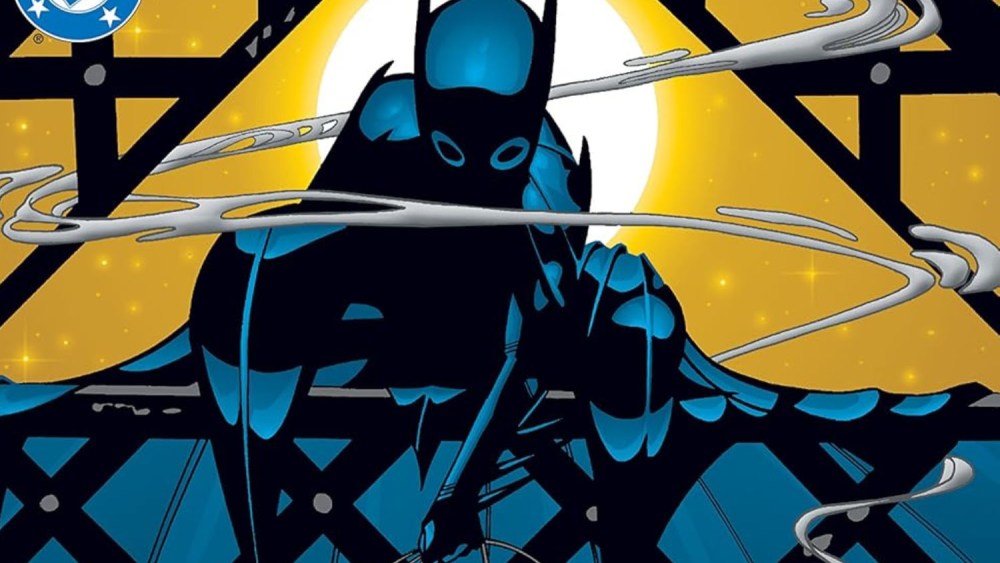
Perhaps you already know Cassandra Cain. She is the second major holder of the title of Batgirl and is a character who was able to not only endure but succeed despite hardships. I’m not going to start off with a long introduction about who and what she is and what her extensive personal history is like (if you need a refresher, you know how to use Wikipedia ). No, before I get into a long, drawn-out discussion of this character you’re reading here, I need to first provide some personal background to set the tone for the conversation.
In recent years, there has been a trend among fans to revisit this character and interpret her through a neurodivergent lens, and autism spectrum disorder is one of the most popular I’ve come across. I myself heard this suggested by a blog post a long time ago, and I can’t seem to dig it up now, but believe me when I say it existed. Trust me, it made an impact.
To be honest, I’ve never been particularly open about my neurodivergence, my autism. This diagnosis was something I was lucky to receive at a very young age, and therefore something I had to live with consciously for most of my life. It’s a part of me that I’ve kept hidden for a long time, a vestige of shame that carried me into adulthood. These days in my adult life, I see people with ASD wearing it like a badge of honor and openly celebrating what makes them who they are.
Unfortunately, this was not a favorable environment for me. When I hit my teenage years, the word “autism” was just a slur thrown around irrelevantly. I felt ashamed that I was born that way and could think differently and see the world differently. Whenever I hear the word “autism,” I always (and still sometimes find myself doing it subconsciously) get nervous and flinch. It had become the new hipster insult, so I saw it a lot every day, and even if I had supportive friends and family, I still felt that shame and loneliness. I was there. I felt like I had to be one of the “normal people”. You know, one of the “good” types of autism, the one that fits. So I never brought it up. I was hiding behind the mask of “normal.”
Yes, this was a difficult time for me, but it was also the environment where I fell deeply into comic books and where I met some of my dearest friends. And there was one character that resonated with me more than any other, and that was the character I knew as “that guy.” It took me years to realize that I saw a lot of myself in a character who could relate my own struggles to autism.
Cassandra Cain, the second Batgirl. The best Batgirl.
Courtesy of DC Comics.
There’s a lot that can be said about Cass’s importance to the industry. Being a woman of color is a very notable notch in her belt, carrying on the legacy of famous white characters. Still, I’m not one to talk about her special legacy. But what I can say is her importance to me and to me alone. She cared deeply for a confused and anxious autistic teenager who felt isolated from those around him. He grew up in a place and time where he was constantly told that his ideas were not only abnormal and ununderstandable, but worthy of condemnation and ridicule. I didn’t need to listen to him. He just needed to be normal.
One of the central themes of Cassandra’s books is her struggle to be understood by others and to understand what others take for granted as normal behavior. Frankly, no one can understand her. And how could they? She sees, interacts, and communicates in a completely different way than anyone she’s ever met has had to parse. She has her own very special way of communicating with the world around her, which is often treated by others as something very difficult and difficult to understand. People think she’s really weird at first glance, so they usually need to see some evidence that she’s “normal” before they can open up to her. Even the few people who speak her “language” in some sense don’t speak it as fluently as Batman himself. (To be honest, there is one other character who could make a strong case for an ASD diagnosis, but that’s a discussion for another day.) It’s a conflict that colors many of her early performances. .
Courtesy of DC Comics.
This was very emblematic of my experience with autism growing up. Living in this world, we often feel like our ears are closed off, and no matter how much we want to shout our frustrations to the heavens, people don’t understand, and they don’t understand us. did. My words are just silence to a world that chooses to be deaf. Cassandra was unlike any other character I read at the time, and she went through similar struggles in her personal life as I did. She struggled to communicate with loved ones who, despite their best intentions, did not always understand her and sometimes did not want to understand her.
Sometimes loved ones who would very much like it if they could talk like a “normal” person instead. Even in the early stages of solitary behavior, the telepath must literally “rewire” her brain to resemble what he thought was normal in order to read her thoughts in an understandable way. . It’s an experience that completely removes Kath’s greatest talent: her movement, reading her body, and the way she perceives the world. Her brain is now “normal,” but at what cost? What about her unique skills and talents? What about her personal worldview and how she sees the world? Just as many autistic people like me have to live in a world that refuses to accommodate them, respect them, care for them, or even listen to them. Cassandra also had a lonely and unique voice in the storm of so-called “normality.” Anomalies that need to be corrected.
Courtesy of DC Comics.
Specific examples from her early sources include, in particular, the common statement I heard early on that autistic people were simply “wired differently” than neurotypical people. , somewhat bitter. “Masking,” a term sometimes used to describe how autistic people try to force themselves to conform to expected norms, is a term that is sometimes used to describe how autistic people try to force themselves to conform to expected norms. Cassandra’s forced rewiring now makes me painfully empathetic. Just to be clear, I don’t actually think this was intentionally minor or intentional coding on the part of the people working on the book at the time. Cass, by the nature of her abilities, is a character without an inner monologue, and wanted a quick and easy way to justify giving her an inner voice so the reader could get into her head. Yes, I understand too. But in retrospect, its handling was sloppy, hasty, and unfortunately very emblematic of how society views neurodivergence.
Courtesy of DC Comics.
However, this didn’t do much to remove Cass’s relatability for me, and from then on the story focused more and more on the misunderstandings and misunderstandings surrounding her. A notable aspect of her original run is her mentor/mentee relationship with Bruce Wayne and Barbara Gordon, who serve as her surrogate guardians for much of the series. Babs and Bruce are the main characters that Cas interacts with in most of the early stories, and are the people that Cas most imitates herself to. Their relationship with her is again very parental, with Barbara in particular often playing the role of a helicopter mom trying to live vicariously through her “daughter” and Bruce being more than himself when it comes to “children”. A father who thinks he knows. want.
Unfortunately, Barbara in particular is not always given the right framework in these stories, and there are moments that resonate, sometimes quite painfully. Very unfortunately, there are instances where she berates and belittles Cath as she struggles to learn how to read. Throughout my life, I have received harsh or derogatory comments from people who care about me out of frustration, and have struggled to understand me or communicate in a mutually understandable way. I can think of several times I have had the experience of doing so. Even if you know they don’t mean it, it can still hurt. As I was re-reading this material for this article, I was really winced by that, even if the story didn’t seem to have any real depth to it. I understand how terrifying such moments can be.
In recent years, the way the creators have written Cassandra has always had a tendency to be at best misguided and at worst disappointing. Cass’ speech is in many ways the most important part of her character. The way she communicates defines her. Intentionally or not, her features are the most obvious similarities from which neurodivergent experiences can be drawn. She no longer speaks like herself. Of course, not all writers necessarily made her talkative, but it was not about being quiet, it was the way she spoke that mattered, not the frequency.
“Cas’s speech is in many ways the most important part of her character. The way she communicates defines her.”
In recent manga, it is not uncommon for characters to speak entire sentences. She can now tell jokes, make sarcastic remarks, and sometimes even just chatter as if she were any other average character. An occasional quiet joke or a humorously sharp remark? Sure, but she said it in her own rhythm, not like she was a completely different person with an entirely new personality. That’s not Cassandra Cain. I don’t know exactly who that character is, but it’s not her. Cass’s soft-spoken style, the unique, thoughtful, contemplative sentence structure that made her who she is, rose up and faded away. It’s no longer part of her personality like it used to be.
Granted, much of her story during those 52 days before New Life was about her trying to improve her reading and speaking skills, but we got to follow her journey and struggles. The really important part was her journey to bridge the gap in her communication. Not showing that, not continuing that journey or exploring it further, just having her be the “quiet girl” who cracks the occasional joke or throws out unbroken complete sentences, is my In the eyes, that’s the wrong message to send. Kass wasn’t just a dumb person who needed a boost to “speak normally.” She had unique neurological barriers that made life difficult for her and difficult for others to understand her thoughts. That’s something that I, as an autistic person, can relate to, and I’m sure many other neurodivergent people who loved her as much as I did. If she is going to change in such a fundamental way, that journey needs to be tracked, developed, and respected, not glossed over.
Courtesy of DC Comics.
I really love Cassandra Cain. She has been my favorite cartoon character since I was a teenager. Not all autism experiences are the same. I’m sure some of you who are on the autism spectrum like me have had the exact opposite experience, but I’m sure some of you have struggled with autism just like I have. Cath made me feel like she was there for me and helped me when I needed it most. Without her, I wouldn’t be able to talk about autism as openly as I do now, and I think that’s important. That’s important. But maybe I’m wrong. She’s not “canonically” neurodivergent, so it’s probably not that big of a deal to most people, right? perhaps. But her unique struggles and the journey she took with her were also meaningful to people like me. To me, Cath was autistic in every way.
Take away the key symbol of a wheelchair, and Barbara Gordan no longer feels like an Oracle, even if she’s behind a computer desk. You try to give Cassandra a voice that is considered “easier to write”, “normal”… all you do is take away the voice of truth. That voice was honest, real, and unique to her. A voice that spoke to me more clearly than I could ever say. You take them all away and all that remains…
…The sound of deafening silence.
(Special thanks to Kelley Puckett and Damion Scott for creating Batigl, and thanks to my friends and family for their eternal patience and kindness.)
Courtesy of DC Comics.
