


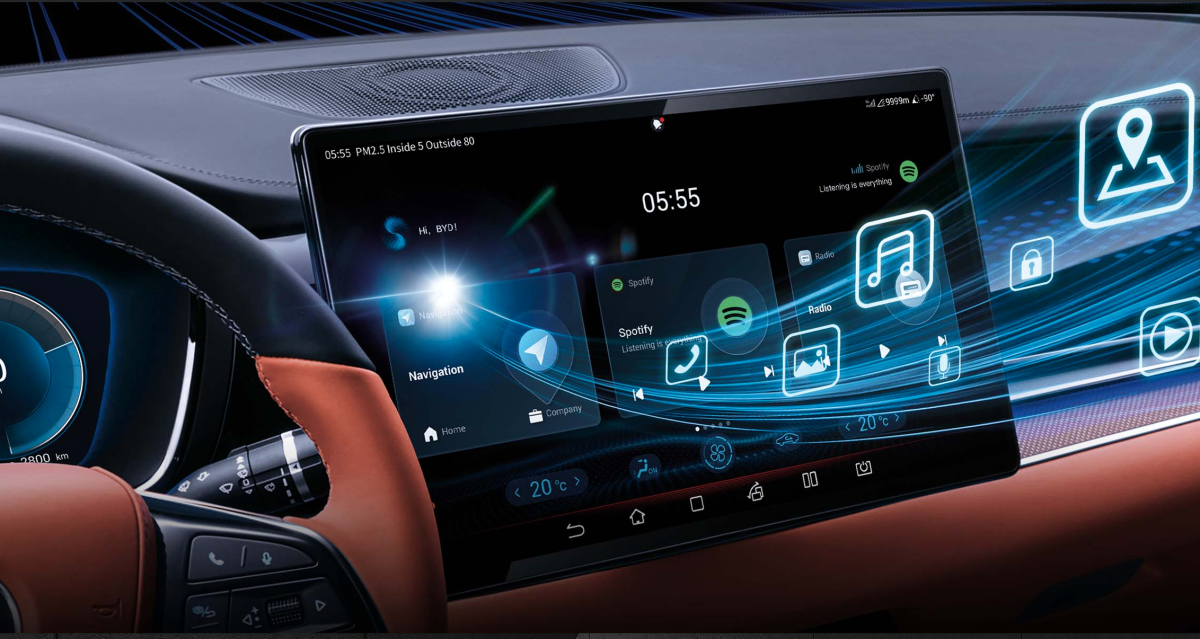
The Biden administration has announced a sweeping plan to ban Chinese-made software and some hardware from being installed in internet-connected cars in the U.S. It has framed it as a national security measure, with the administration saying the software poses “new threats to national security, even through the supply chain.”
This is the same reason that telecommunications equipment from Chinese companies like Huawei and ZTE was recently banned. In that case, the allegations were substantiated, as documents had been published implicating Huawei in Chinese surveillance activities. Today’s announcement goes on to say that China could use “critical technology within the supply chain for surveillance or sabotage, potentially harming national security” in connected cars.
The rules announced today go beyond just software. They also cover any hardware that connects the vehicle to the outside world, including Bluetooth, cellular, Wi-Fi and satellite communication components. This includes cameras, sensors and on-board computers. The software ban will go into effect for 2027 model years, while the associated hardware ban will begin with 2030 model years.
The proposed ban would also include Russian automotive software. Russia has a fairly strong EV industry, but it’s mostly domestic. Russia doesn’t have anything as globally popular as cheap EVs from Chinese companies like BYD.
And that brings up a key point: While the proposed ban is primarily aimed at internet-connectivity software, it would effectively ban all Chinese imports of cars, including the software that’s mostly built into them, as well as the hardware that enables connectivity. Recent tariffs on Chinese-made EVs have already made it hard to get these cars in the US, but this move would make it nearly impossible.
But administration officials are adamant that the move is intended to improve national security, not to lock cheaper EVs out of other markets. “Connected cars and the technologies they use pose new vulnerabilities and threats, particularly when the vehicles or parts they use are developed in China or other countries of concern,” Biden’s national security adviser, Jake Sullivan, said in remarks to reporters over the weekend and transcribed by The New York Times.
Sullivan also mentioned something called Bolt Typhoon, a purported Chinese attempt to inject malicious code into U.S. power systems, pipelines and other critical infrastructure. U.S. officials worry the program could be used to cripple U.S. military bases if China invades Taiwan or conducts a similar military expedition.
“This opens the door to a much broader set of government actions over a period of years that will likely continue” regardless of who wins the presidential election, Peter Harrell, who served as senior director for international economics at the National Security Council during the Biden administration, told The New York Times.
For example, it’s worth noting that the BYD Seagull retails for around $10,000, which is still much cheaper than American EVs, even after a hefty 100 percent tariff. $20,000 for a fully-featured EV sounds pretty enticing now. Oh well. It was fun to dream.
