


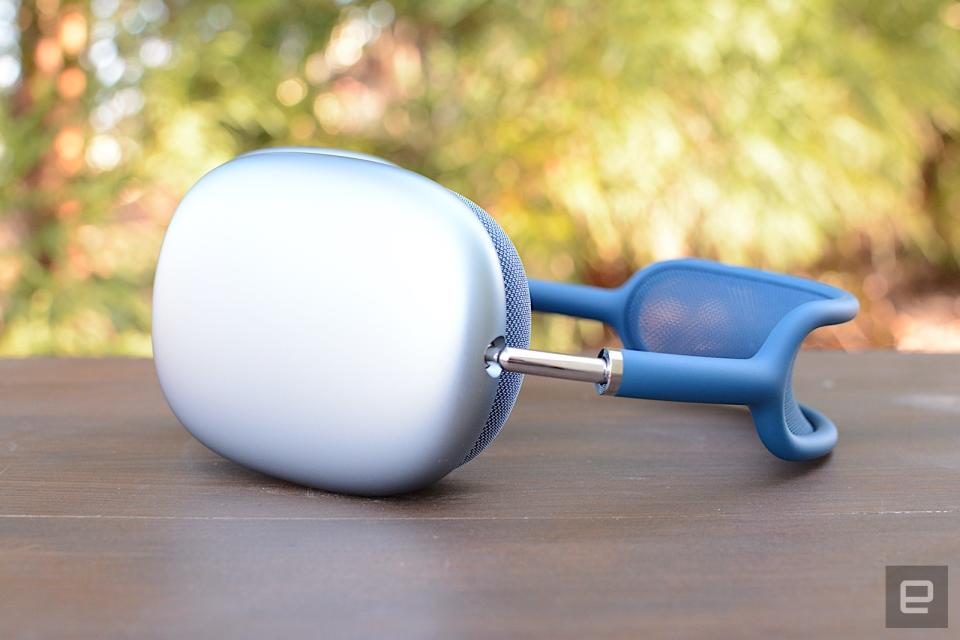
As I write this, I’m listening to music with the 2020 AirPods Max. Yes, I’m a bit of an Apple fanboy and would currently recommend 6+ pairs of headphones over the AirPods Max. But for me, the AirPods Max still have outstanding sound quality, better active noise cancellation, and work better with the devices I use most. They also lack a few features compared to the second-generation AirPods Pro released in 2022. That doesn’t bother me considering they’ve been around for almost four years, but the idea of spending the $550 Apple is asking for a refreshed version of these headphones announced yesterday seems ridiculous, even if it’s a relief to finally have USB-C.
Incidentally, Apple was not expected to announce an update to the AirPods Max at the iPhone 16 event, but the day before, Bloomberg’s Apple forecaster Mark Gurman surprisingly said that the headphones would get their first major update. However, the update included replacing the Lightning charging port with USB-C and some new colors. And that’s it. Nothing that would make an Apple nerd like me want to upgrade (although I do wish the headphones had USB-C now that I’ve pretty much moved away from Lightning devices). I like the new colors and I’d like to switch to USB-C, but not enough to spend $550. To be honest, I can’t even pay half that.
Meanwhile, Sony regularly updates its flagship headphones, with the WH-1000XM3 coming in 2018, the XM4 in 2020, the XM5 in 2022, and the XM6 due in 2025. High-end headphones should last for years, so most Sony users aren’t going to upgrade from the XM4 to the XM5 or even the future XM6. But buying a company’s flagship headphones means you’re getting the best product the company can make. Sony has made sure of that by improving the design, extending battery life, and improving ANC.
The most frustrating thing about the AirPods Max update is that they had to do at least a little internal redesign to accommodate USB-C. So why not upgrade the chip to the H2 processor? The H1 variant found in the AirPods Max was first released as part of the second-generation AirPods in early 2019. And now, all AirPods, including the just-announced $129 fourth-generation model, use that H2 processor. This enables useful enhancements like adaptive audio, which essentially blurs the line between traditional transparency and noise-canceling modes depending on the sound around you. It also lets you respond to Siri by nodding or shaking your head, without having to speak out loud.
These features would be welcome additions for potential AirPods Max buyers, but instead, these very expensive headphones are stuck with a five-year-old chip for the time being. It’s hard to see how this is foolish, considering that the entry-level AirPods get some of the benefits of the H2 processor. Of course, the speaker quality and tuning of the AirPods Max far exceeds what you’d get from a $129 pair of earbuds. But as Apple’s top-of-the-line headphones (cost, not features), they’re a tough sell, given that they lack the features available in the ANC-equipped AirPods 4 at a third the price.
Catch up on all the latest news from Apple’s iPhone 16 event!
