

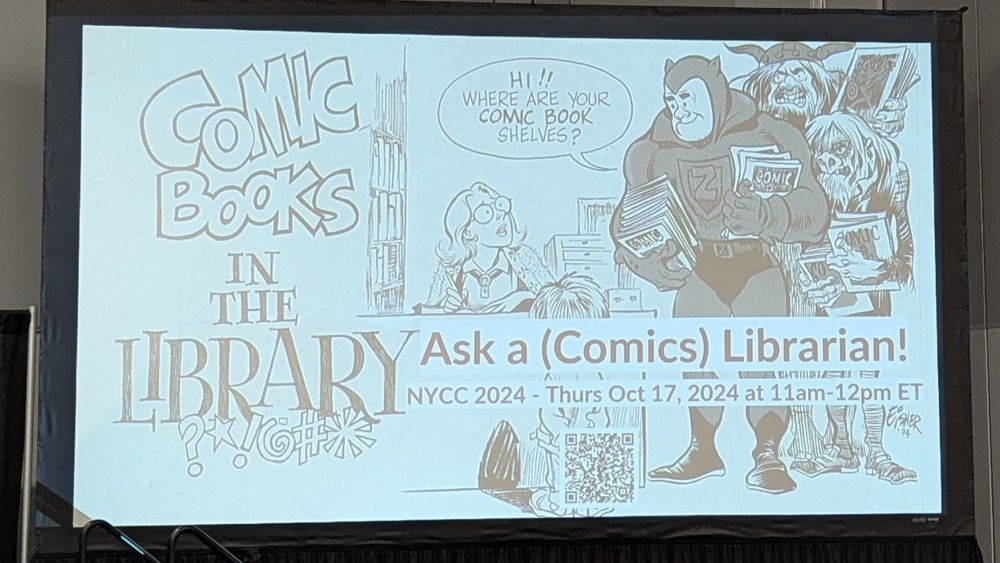
My first panel at New York Comic Con was aimed at librarians interested in incorporating and exploring comics and graphic novels in their collections. This panel was sponsored by NYPL.
With a large audience of educators in attendance, moderator Amy Wright of Carleton University began the panel discussion with a brief overview of 50 years of comic book library activity. The roots of manga library activities can be found in a 1974 article in the “School Library Journal.” Sketch by Will Eisner.
Other highlights include the 1990 publication of The Comics Librarian: A Handbook. In this book, comics librarians idealistically predicted that it would be popular within 10 years. In reality, it remains difficult for many school libraries to take comics and graphic novels seriously as important reading materials for students.
Another big highlight was C2E2 in 2009. This was the first time the American Library Association participated in community support and professional development at a major conference.
The panelists then shared their “origin stories” of how they got started in comics and some of the coolest things they’ve accomplished. The panelists came from a variety of backgrounds, including lifelong comic book readers who would sit in high chairs as toddlers and look at newspaper comics for hours at a time. Other panelists got involved in comics much later in life, either through their spouses or as part of their eventual careers. One of the coolest things Megan Halsband did while working at the Library of Congress was acquiring key issues of rare comics like Batman #1 and Captain America #1.
The panelists also gave advice to librarians, including that you don’t need to get a specialized job related to comics, and that you can always bring your passion for comics to work in any job. A key theme was relying on resources created by others. There’s no need to reinvent the wheel. They have shared a resource document that will be very helpful to anyone in this field.
What all of the panelists had in common was the eternal struggle to help people understand that comics aren’t just for kids, and that there’s more to the comic book medium than just superheroes. There are actually comics about every topic. Another piece of advice is don’t just build a collection. Community outreach should also be included to let people know about the collection. One way is to visit local comic shops and partner with them to learn about popular and best-selling comics in your area.
Overall, it was a great panel packed with great insights and resources for educators, librarians, and comics fans alike.
