


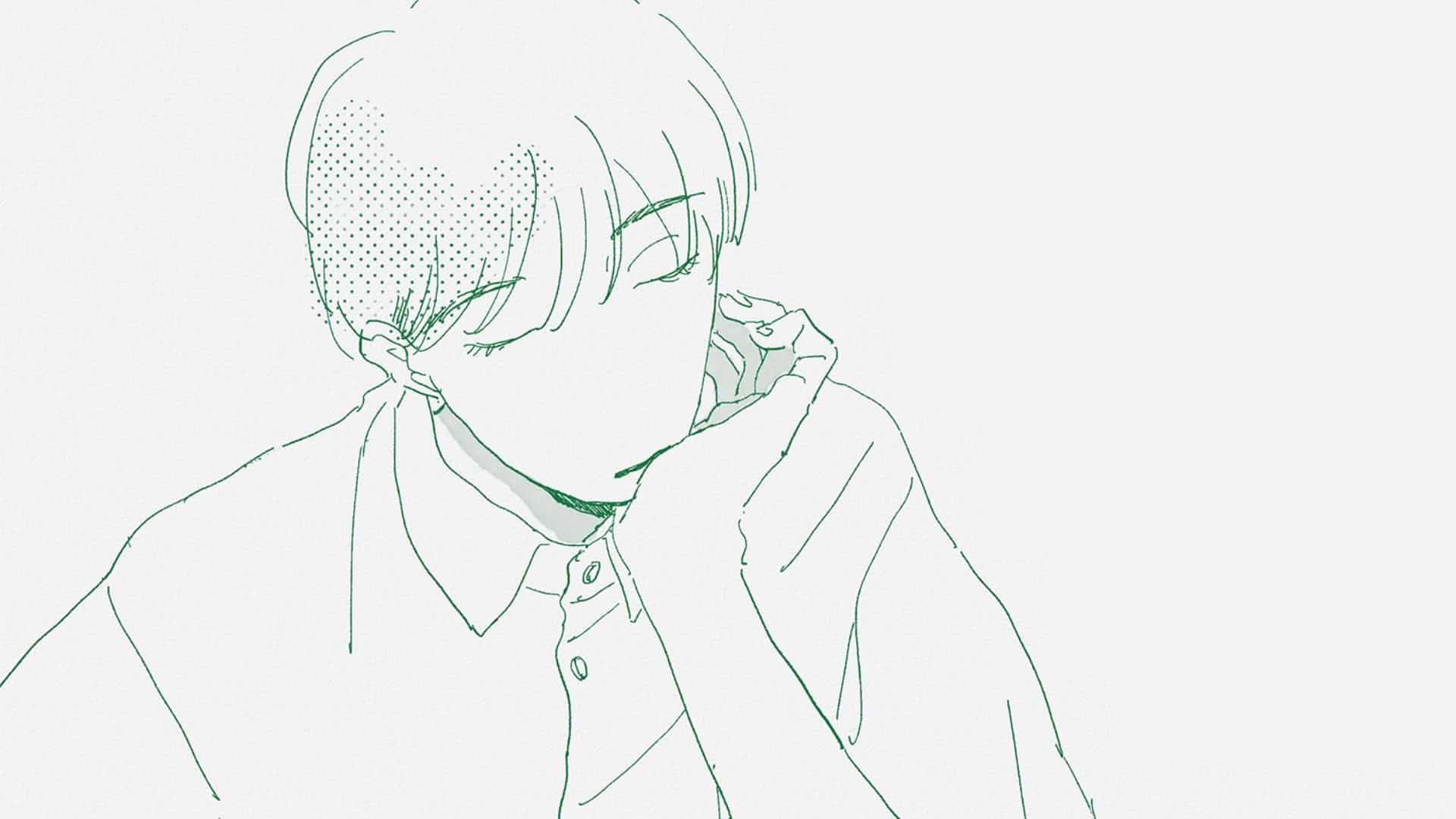
My Oh My Atami-kun Volume 2
Writer & Artist: Tanuma Asa
Publisher: Yen Press (print and digital editions)
Translation: Amanda Haley
Lettering: Elena Pizarro
Publication date: April 22, 2025
Rating: Older Teen
Genre: Manga (Japan), LGBTQ+, Slice of Life, Romance
“My Oh My, Atami kun” is Asa Tanuma’s debut work in the English market. Volume 2 was released by Yen Press in April. If you want to catch up or refresh your memory, check out The Beat’s review of the previous volume. Here are my thoughts on the continuation of the series.
©Yen Press, 2025
Volume 2 of My Oh My, Atami-kun begins with a very endearing three-page chapter in which the Adachi family goes shopping, then has dinner, and talks about how Atami has become a part of their daily lives. Adachi commented on how much space Atami occupied in the hearts of her sisters and mother, even though she visited once or twice a week, only adding soup out of habit.
Portraying the self in fiction is something I’ve been thinking about lately, and it was interesting to note how this series chooses to build Atami as a character through her interactions with others, rather than using an omniscient narrator or commentary to drop information at her. He’s like a newly hatched baby chick, experiencing and learning new things that others might think are mundane, but he takes everyone and everything seriously.
©Yen Press, 2025
Asa Tanuma shines in the subtle everydayness of the series, where the events that take place in the series feel more like an undercurrent than a colossal wave that is being dragged down by force. They deftly deconstruct our daily lives. As we shared sweets in the schoolyard after lunch, the conversation gradually turned to whether anyone could honestly say if the food they were served was delicious. Kunishima suddenly asks Atami if she is in love with him, and Adachi and his friends discuss what love is.
Sometimes the conversation ends there. Other times, someone picks it up again and expands on it. Either way, these small instances grow into compelling arguments that not only reveal the core truths about how we live our lives, but also reveal layers of these characters that aren’t immediately visible. I understand that My Oh My, Atami-kun may not appeal to everyone, especially readers looking for plot progression in the traditional sense. However, if you enjoy stories where the events are the characters themselves, their inner worlds, and their interactions with others, then you’re in the right place.
©Yen Press, 2025
In the early chapters, Atami and Adachi formulate a plan. Before going home, Atami stops at a bookstore, where she meets a classmate. Another boy, Kusumoto, knows Atami, but the protagonist cannot remember him. Atami is confused by Kusumoto’s strangely pushy and friendly attitude. Moreover, he snuggled up to Atami and forced himself to take a selfie. He takes one more look before leaving and asks, “Are you the type who doesn’t have any friends?”
It’s a disturbing exchange just reading about it, and Atami is visibly shaken and lost in thought trying to make sense of it all. But then I remember one night at the Adachi house where we set off small fireworks in the garden. Adachi walks up to Atami and asks if he can take a photo with her. Surprised, he reminds Adachi that he had heard the same thing the other day, but Atami replies that that’s fine. To Atami’s (and me’s) surprise, Adachi casually answered:
©Yen Press, 2025
The rest of their conversation is also interesting. It’s great to see these small moments of feeling uncomfortable yet struggling to make sense of the situation that’s happening or to put an accurate name to the feeling, the violation of boundaries in ways that seem trivial in hindsight or seem unimportant to others, highlighted and juxtaposed with acts of kindness. Of course, these are not as harmful as, for example, a violation of someone’s bodily autonomy, and may at best be a small inconvenience. But just because the consequences of an action aren’t harmful doesn’t mean it’s not stressful to experience.
However, Asa Tanuma does more than just draw parallel lines. Kusumoto is often seen as arrogant and unfriendly, but his personality is also positive and kind. Later in the volume, Kusumoto imposes himself on Atami, who is walking towards the station after school. Along the way, Kusumoto fills the silence like a chatterbox, helping two strangers talk, picking up things they’ve dropped, and helping an elderly woman who can’t find her way. This cannot be read as an attempt to redeem him, as he is not transformed in any way, but rather to humanize him. Atami admits that Kusumoto was great for intervening, but refuses to exchange contact information because it’s too much from Atami’s point of view.
©Yen Press, 2025
In a sense, life is about negotiating what you want to do, what you should do, and what others expect of you. It’s not easy to maintain a careful balance. Like the conversation the boys were having in the garden, would you choose honesty and tell the person who kindly offered you the food that you didn’t like the taste? Would you even be upfront about it? Or will he think this is a good deed, put the other person’s feelings above his own, and simply lie? Where do you draw the line between reading the mood in a room, being considerate of others’ feelings, and adhering to your own boundaries?
Atami reminds me of Totonou from “Don’t Say Mystery” in the sense that you never miss a thing. Even if someone asks me to do something that I don’t want to do, after I clearly refuse, I talk about it with my friends and close school friends, and sometimes consult Adachi’s family. He questions, reconsiders, tries to find compromises if possible, thinks deeply about the situation, no matter how small or insignificant. He is what the kids call a “sensitive boy” and we love him for that.
©Yen Press, 2025
One thing I would like to mention before finishing the review is the text/design of the cover. Elena Pizarro is credited as the letterer and the book’s designer is Liliana Czech. Look at the typography on the cover of the English version. It perfectly conveys the original’s quirky and cute style. It is not easy to convey the same effect because of the difference in directionality between the two languages, and because kanji themselves are visual words compared to words written in Latin script. Letterers and typography artists are very talented.
In short, I feel like My Oh My, Atami-kun’s ambassador. I know that on the surface it’s not the most exciting or eye-catching series that will keep you writing theory threads on sleepless nights, but I can’t recommend it enough. Very good! No one can resist this adorable kid who stares into your soul on the cover! Atami Best Boy!
“My Oh My, Atami-kun” Volume 2 is available in digital and print versions on the Yen Press website and other retailers.
Something like this:
Like loading…
